

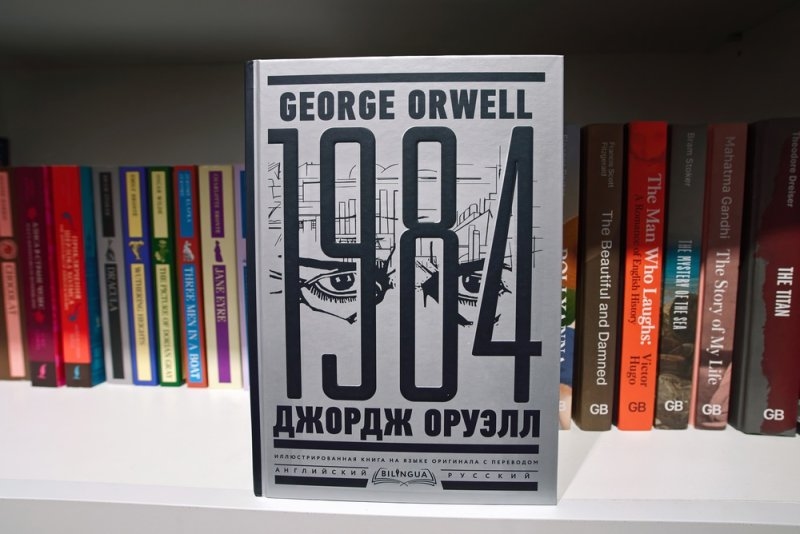
People love to pretend that global collapse is a distant, fictional concept, completely ignoring the fact that modern reality is rapidly bleeding into an authoritarian nightmare. This is exactly why reading dystopian fiction books is no longer just casual entertainment; it is a necessity for understanding social change. Authors are not just guessing what the future looks like; they are dissecting the political corruption, corporate greed, and technological surveillance that the masses blindly accept every single day.
Must Read: Book Trends 2026 That Are Transforming the Future of Reading
These stories rip the facade off modern civilization. Forget flying cars or polished space stations; this genre dumps you straight into corrupt police states, breadlines, and state-sanctioned propaganda machines. It takes our worst habits—hoarding wealth, trading privacy for convenience, ignoring dirty water—and runs the math until society snaps under the pressure.
Top Pick: What Are the Different Types of Book Genres Available?
Bypass the airport bookstore displays packed with sterile, formulaic survival tropes. The real gems do not bother softening the blow. Hunt for books that hit raw nerves—stories tackling weaponized algorithms, rationing basic medicine, or water wars that feel uncomfortably close to tomorrow's morning headlines. If the plot does not make you sweat, put it down.
You cannot understand the darkness without looking at the manufactured light. Comparing these two genres exposes how authority figures actively manipulate public perception to maintain absolute control.
A utopia sells the absolute lie of a flawless, conflict-free society where poverty and pain are magically erased. It acts as a marketing brochure written entirely by the oppressor to pacify the masses.
Dystopian fiction rips that mask off. It exposes the horrific, hidden cost of that artificial perfection, proving that complete peace only exists when an authoritarian power physically crushes free will.
Utopias pretend that everyone is happy voluntarily. Dystopias reveal the truth that citizens are chemically altered, physically threatened, or genetically modified to stop them from ever questioning the established system.
These books bypass cheap jump scares. They zero in on the specific pressure points already rotting our trust in modern society.
Forget private thoughts. These stories show police scanning your phone, tapping street cameras, and kicking in your door before you even act on an illegal thought.
Governments step aside so mega-corporations can run the show. They privatize drinking water, patent basic medicine, and trap entire workforces in perpetual debt cycles they can never out-earn.
No clean sci-fi cities here. Writers dump characters into bone-dry dust bowls where the ultra-rich hoard the last clean water supply behind private security walls while everyone else chokes on toxic air.
Stop wasting time on watered-down science fiction. These five heavy-hitting books completely redefine the genre and deliver brutal, uncompromising visions of an inevitable, engineered collapse.
Orwell did not write a novel; he handed modern dictators an instruction manual. He laid out exactly how regimes monitor your screens, delete inconvenient historical facts, and butcher the dictionary until citizens literally lack the vocabulary to complain about the boot on their neck.
Huxley understood that tanks and secret police are too expensive. It is much cheaper to just feed the public synthetic drugs, flood their lives with cheap sex, and watch them gladly hand over their autonomy for a reliable dopamine hit.
Forget traditional brainwashing; this state uses scalpels. By mandating extreme plastic surgery at age sixteen to make everyone visually flawless, the government quietly cuts out the brain's capacity to rebel. It is modern social media filter culture taken to a horrifying, medical extreme.
For a decade, the publishing industry completely pivoted to force-feeding readers a massive wave of teenage rebellions. Understanding the explosion of young adult dystopian books requires analyzing how publishers weaponized adolescent angst for massive profit.
These books push the narrative that a single, uniquely gifted teenager can overthrow a massive, entrenched government, selling a highly profitable power fantasy.
Publishers refused to sell pure misery. They shoved contrived love triangles into the middle of apocalyptic warzones to keep casual readers hooked, softening the political commentary.
Books mathematically divide society into rigid, personality-based factions. This perfectly mirrors the stressful, suffocating social cliques of modern high schools, forcing isolated adolescents to identify with the trauma.
You cannot ignore the warnings these authors have laid out for decades. The most terrifying aspect of dystopian fiction books is not how imaginative they are, but how accurate their predictions have become. Society is already living through the early stages of mass surveillance, algorithmic control, and corporate monopolies that these legendary authors warned about.
Because controlling the past gives a regime absolute power over the present. If an authority figure physically destroys history books and manipulates the archives, they can instantly erase their own failures and force the population to accept whatever fabricated reality keeps the elite in power.
While traditional dystopias focus on aggressive government oppression, cyberpunk focuses entirely on hyper-capitalist corporate decay. It envisions a gritty, neon-soaked future where governments are weak, and massive tech monopolies completely enslave humanity through cybernetic implants and unregulated virtual reality.
Authoritarianism thrives in absolute chaos. When the oceans die and crops fail, the general population panics. They willingly surrender all their basic human rights to any ruthless dictator who promises to distribute the remaining food and maintain order through military force.
Yes. Look at any major protest. Crowds constantly steal symbols directly from these books, whether it is throwing up a three-finger salute or wearing red Handmaid cloaks. When politicians crush basic rights, fiction becomes the literal protest playbook.
Because human nature actively rejects forced, artificial peace. The manufactured stability always requires suppressing intense emotions like love, grief, and passion. Eventually, someone wakes up to the fact that living a safe, drugged-out, robotic existence is significantly worse than actually feeling the painful reality of being human.
This content was created by AI